Coating-sensitive wind turbine cleaning
Turbine surfaces are coated for a reason, and the coating is what takes the weather. Cleaning is done at pressures and with chemistry selected to remove contamination without damaging the protective layer.
Wind energy
Turbine towers and blade roots collect salt, dust and organic growth. SKAI reaches them with drones, using water and chemistry chosen to protect the coating.
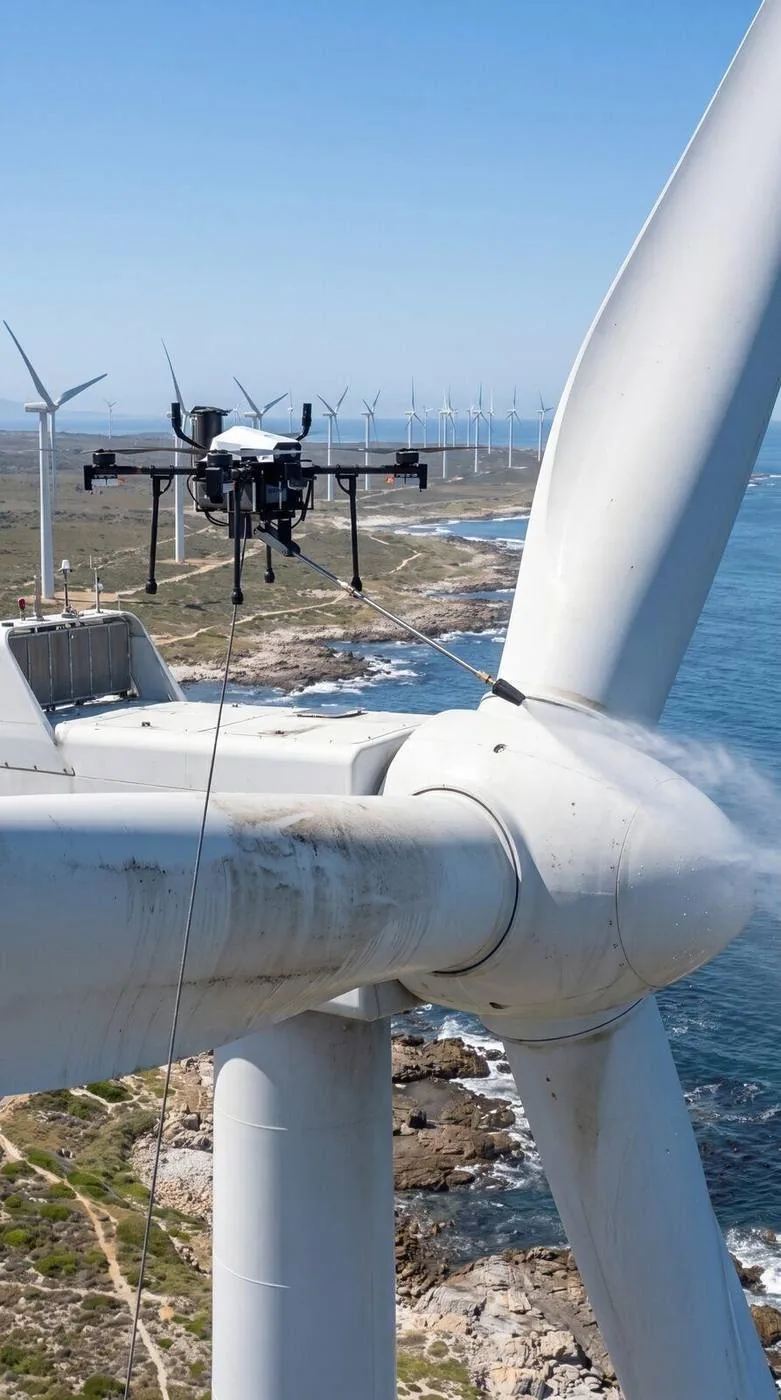
Turbine surfaces are coated for a reason, and the coating is what takes the weather. Cleaning is done at pressures and with chemistry selected to remove contamination without damaging the protective layer.
Reaching a tower normally means rope access, a crane or a lift. Drone access removes that setup for the cleanable surfaces and keeps the maintenance window short.
Coastal installations carry salt and sea spray, inland sites carry dust and organic growth. Each needs a different water and pressure combination, which is set per site rather than reused from a previous job.
Turbine sites combine industrial hazards with aviation requirements. Airspace, location, aircraft, conditions and required approvals are assessed before flight, and the operation runs inside the applicable safety framework.
The work is concentrated on the tower sections, the blade root, the nacelle base and the access platforms: the surfaces that collect salt, dust, insect fouling and lubricant mist and that can be reached without touching the blades.
Everything else depends on the turbine type and the operator's access rules, which is why each wind farm is assessed before a method is proposed.
Wind turbine tower cleaning is done from the air: the drone climbs the tower section by section while the crew stays on the ground. No scaffolding, no cranes and no rope teams are set up on site, which keeps the nacelle access and the service road clear.
Tower sections, the blade root, the nacelle base and access platforms are worked in one pass, and the same flight records the condition of the coating for the operator.
Coastal sites carry salt and humidity; inland sites carry dust and insect load. The interval is driven by what the coating can be inspected against and by how the surfaces look at each service visit rather than by a fixed calendar.
Four things set the number: how many turbines and at what height, the access agreement with the operator, how water reaches each position, and the aviation approvals and weather window for the site.
A quote follows the site assessment and inspection flight, not a rate card, because two farms a few kilometres apart often need different logistics.
Questions
We clean the accessible tower and blade-root surfaces. Full blade cleaning depends on the turbine, the coating and site conditions, and is assessed per site.
That depends on the operator's safety rules and the site assessment. We plan the operation around the requirements the site sets.
Purified water and coating-safe chemistry, selected after the assessment of the coating and the contamination type.
Yes. Wind farms are assessed individually for access, airspace and operating conditions.
Yes. Tower sections, the blade root, the nacelle base and access platforms are the usual scope; blades themselves depend on the turbine and the operator's rules.
It depends on height, contamination and how the site arranges access. The schedule is set per farm after the assessment rather than per turbine in isolation.
Request a quote
A site visit and drone pre-inspection come before any price. Share what you can and we will schedule the assessment.