Guide

How often should solar panels be cleaned in South Africa?

There is no single number that fits every site, but there is a clear way to decide: soiling level, location and measured output. This guide explains what drives the cycle and how panels are cleaned without touching the glass.

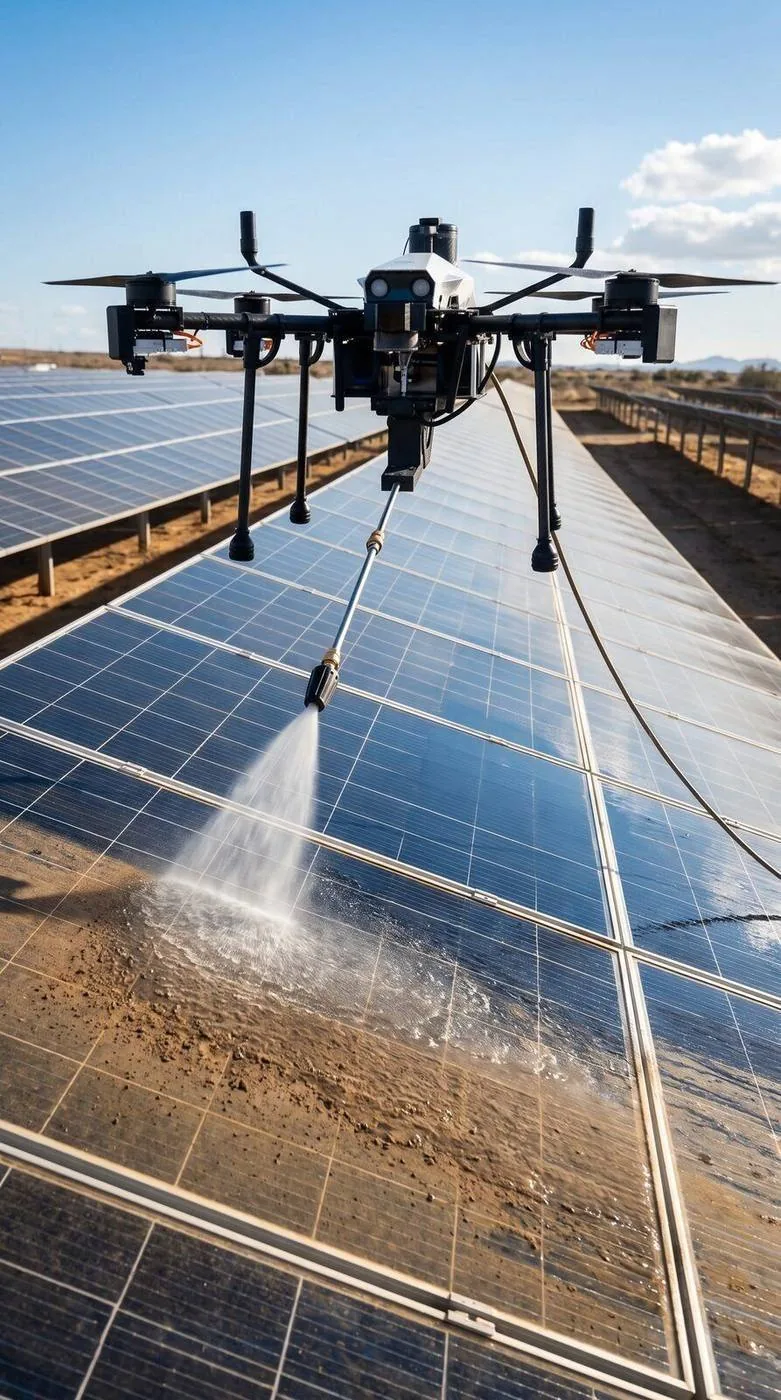
Drone cleaning dust from a solar panel with a water jet

What soiling actually costs

Dust, pollen, bird droppings and industrial fallout shade cells, and shading on one cell affects the output of the whole string. After the dry season and in dusty regions the effect is easiest to see, and light rain does not reliably wash it off: it often leaves a film that dries back onto the glass.

Dusty inland sites vs coastal sites

Highveld and Karoo installations collect fine dust quickly and usually need a shorter cycle. Coastal sites deal with salt and sea spray rather than heavy dust, and shaded or north-facing rows can develop organic growth. Farm installations near unsealed roads are another category again.

How to decide when to clean

Three signals are worth tracking together:

  • Visual: a visible film, dust line along the lower edge of the frame or droppings on the glass
  • Output: a dip in daily yield against the same period in previous years, adjusted for weather
  • Events: dust storms, construction nearby, agricultural activity or the end of a dry season

Cleaned without touching the modules

Purified reverse osmosis and deionised water is applied at controlled pressure and distance from the air, so no brush touches the glass and no technician walks on the modules. Cleaning is done in the cooler parts of the day to avoid thermal shock, and the process is documented so you can show what was applied.

Where a panel manufacturer publishes cleaning requirements, the method is selected to work within them where applicable. SKAI does not claim that cleaning preserves a warranty automatically.

A practical cycle

Most commercial arrays settle into two to four cleans a year, with the exact number set after the first assessment and then adjusted against measured output. Rooftop arrays on dusty sites usually sit at the upper end of that range, coastal residential arrays at the lower end.

Questions

Common questions.

01Does rain clean solar panels?

Light rain often leaves a dried film and does not remove bird droppings or heavy dust. It can reduce soiling, but it does not replace cleaning.

02How much water does drone cleaning use?

Far less than manual washing, because water is applied directly to the glass through the tether instead of being sprayed across the array. Where suitable, purified water is used so nothing dries back onto the surface.

03Can drones clean rooftop and farm arrays?

Yes. The same platform covers commercial rooftops and ground-mounted farm installations; the difference is in the site assessment and the water supply logistics.

04Will cleaning affect the panel warranty?

The method follows documented manufacturer cleaning requirements where they exist, and the process is recorded. We do not make warranty claims either way.

Request a quote

Tell us about the surface.

A site visit and drone pre-inspection come before any price. Share what you can and we will schedule the assessment.

Your details are used only to respond to this enquiry and to arrange the assessment.

WhatsAppQuote