Guide

How drone facade cleaning works, step by step.

Drone facade cleaning is not a drone with a hose. It is an access method combined with a ground-based cleaning system. Here is how a project runs from the first site visit to the final inspection.

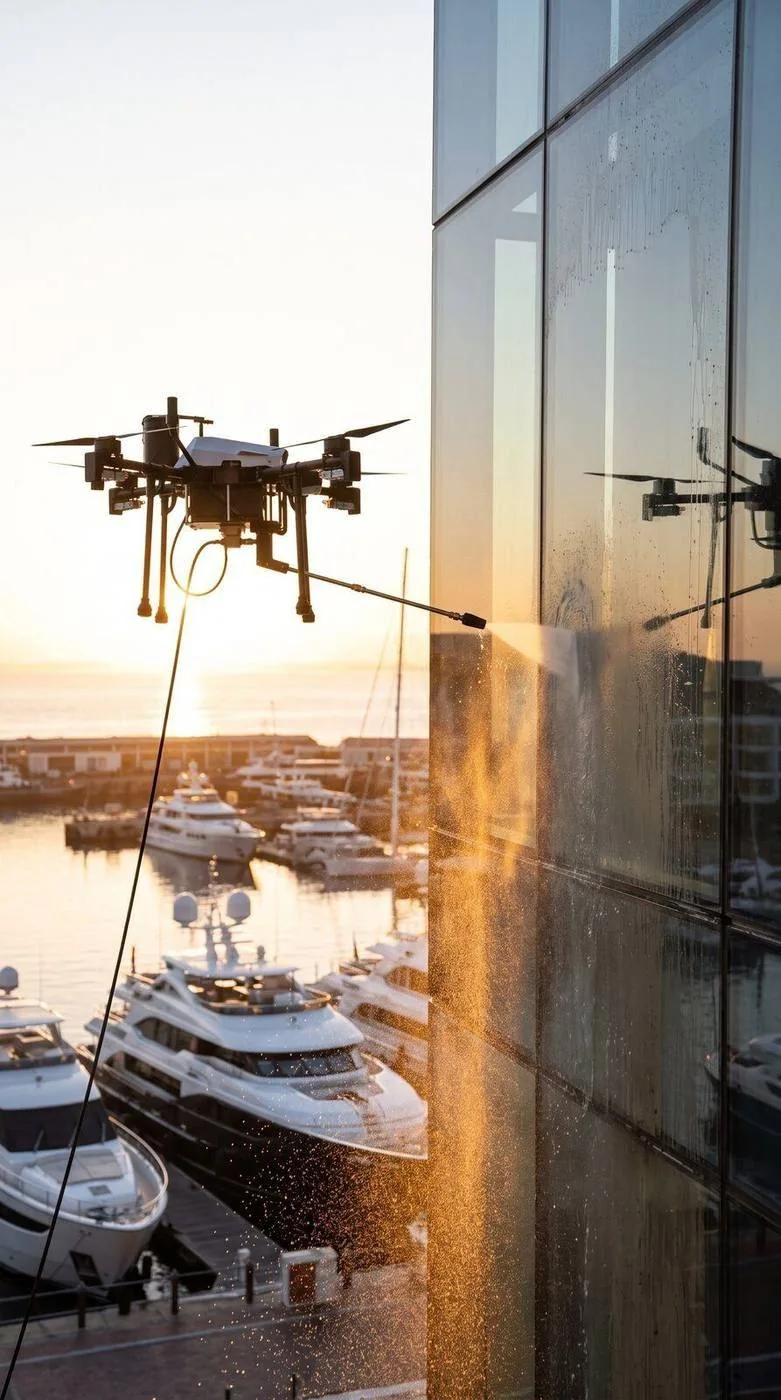
Drone spraying purified water onto a glass curtain wall

1. Site visit and inspection flight

Every project starts on the ground. The site visit records access, obstacles, the surfaces involved and the environment around the building. An inspection flight then documents the parts that cannot be seen from street level: high glass, parapets, gutters and roof plant.

The findings become a condition report, and the report becomes the scope. This is what makes a quotation project specific rather than a square metre guess.

2. The ground tether system

The drone carries the access, not the water. Purified water, pressure, temperature control and chemical application stay in a ground unit and travel to the nozzle through the tether. That keeps the airborne platform light, stable and controllable, and it keeps the heavy equipment where it can be managed properly.

3. Method selection per surface

Glass, coated composite panels, aluminium, painted plaster and stone do not respond the same way to pressure and chemistry. The method is set per facade:

  • Water quality: reverse osmosis and deionisation where a low-residue finish matters
  • Pressure: low pressure for sensitive or coated surfaces, higher where the substrate safely permits it
  • Chemistry: surface-appropriate and low-foam where required, biodegradable where technically suitable
  • Nozzle and distance: selected for the material and the contamination type

4. Flight day

Before flight, airspace, location, conditions, aircraft and the required approvals are assessed, and the operation runs inside the applicable aviation safety framework. While the platform is airborne, the operator controls the aerial position and the ground system supplies the cleaning media.

Work is usually planned in vertical passes so the facade is cleaned in a sequence that avoids streaks and re-soiling.

5. Post-inspection

Completed areas are inspected against the agreed standard, and any area that does not meet it is addressed within the agreed scope and terms. Projects close with imagery before and after, so the result sits against a record rather than an impression.

Questions

Common questions.

01How long does it take to clean a facade?

It depends on area, access, contamination and wind. The inspection gives enough information to plan the phases and give a realistic schedule.

02Do you need to close the building?

Normally no. Drone access removes scaffolding and cradles, so entrances and tenants keep working during the clean.

03What about wind and weather?

Wind limits are part of the pre-flight assessment. If conditions fall outside the operating limits, the work is rescheduled.

04Can coated or tinted glass be cleaned?

Yes, with water and pressure selected for the coating. Where a manufacturer documents requirements, the method is chosen to work within them where applicable.

Request a quote

Tell us about the surface.

A site visit and drone pre-inspection come before any price. Share what you can and we will schedule the assessment.

Your details are used only to respond to this enquiry and to arrange the assessment.

WhatsAppQuote